
Creating DJs from seven to 97
Starting out in teaching, DJ Dante Legister’s career has turned full circle with the launch of his DJ school, Echo Sound Academy — and for any business owner wondering how the right Croydon workspace can unlock growth, community impact and long‑term sustainability, his story offers powerful lessons.
A business built from experience and passion
Echo Sound Academy is built on a deep love of music, teaching and community – and on founder Dante Legister’s belief that DJing should be accessible to everyone: “We teach people of all levels how to DJ, from seven years old right up until as old as you want to do it. We also teach music production and even how to market yourself as a DJ.”

Dante’s career journey explains the Academy’s distinctive approach. He originally worked in teaching before moving into retail, then made the leap into full‑time DJing in 2010 after years of building his reputation: “I took a risk. But I knew I had the bills to pay, so I just kept going, and I think helped push me to succeed.”
After teaching DJing with another company that later disbanded, Dante decided to continue independently. “I wanted to give back to other people. DJing is more accessible now than it was 20 years ago – equipment costs less, and people are more open to trying it.
“Partly this has been inspired by DJs becoming celebrities in their own rights. If you’re into music but you don’t really sing or play an instrument, DJing is the next big thing. You can do festivals and be just as big as an artist.”
Echo Sound Academy offers small group courses for everyone from beginners through to experienced DJs, as well as events that provide students with opportunities to perform in front of a crowd.
The name Echo Sound Academy reflects that philosophy: “Echo is one of the most-used effects in DJing. Our motto is Make noise. Leave an echo. It’s about creating something that resonates and lasts.”
Finding the right Croydon workspace to create the perfect studio/classroom
Teaching DJing meant finding a workspace that could function as an office, a studio and a classroom – and that ultimately led Dante to Capital Business Centre in Croydon: “Someone actually recommended Capital Space to me. When I visited, I just thought it was a really nice space.”

Security was a decisive factor: “We have equipment on site, and knowing it’s secure gave me real peace of mind.” The ability to access the building 24/7 was equally important: “As a nighttime worker, it’s good to know I can come in whenever I need to and keep working.”
Dante also values the support he receives on site: “If I need anything, I know the centre team is an email away or I can just walk down to reception, and it’s great to know I have that support. For example, before I got my printer the centre team were happy to print off some documents that I needed.
“The centre also feels like a community – different businesses, but very supportive – and you can promote your own business within the community.”
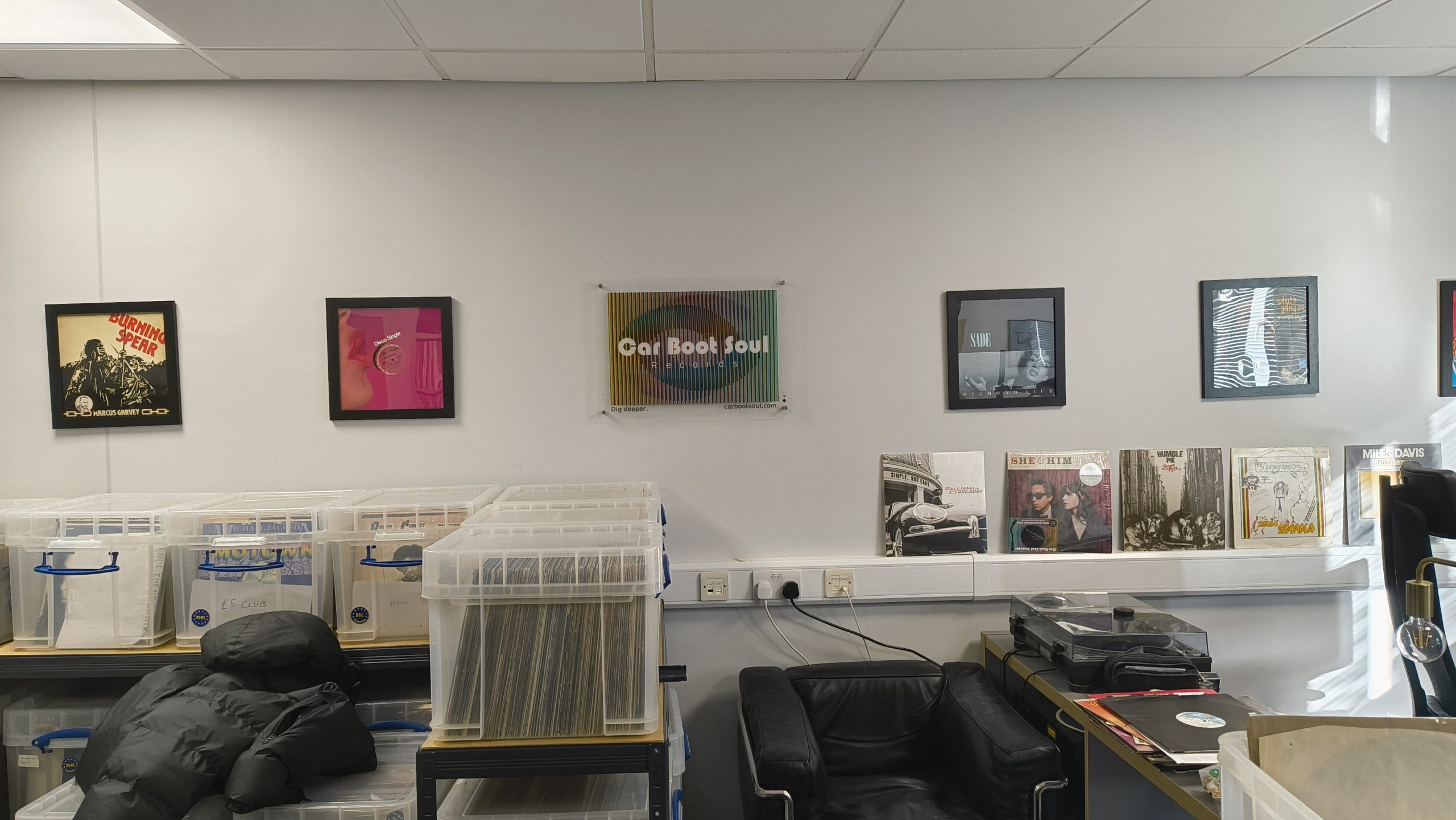
Having a customisable workspace has also been important, as Dante has carefully transformed his workspace to function on multiple levels: “It’s a bit of everything – an office for me and a classroom-studio. I’ve managed to utilise the space really well.”
A business with multi-generational appeal
Echo Sound Academy’s reach spans generations in a way few businesses can match. In schools, Dante works with children of all abilities, including those with autism, ADHD and physical disabilities: “We’re absolutely inclusive. We tailor what we do to each child so they can just have fun and learn.”

Many of those school pupils later become Academy students: “They find their thing – sometimes it’s DJing, sometimes it’s music production – and then they come to the studio. Then their parents get to see the studio and understand what we’re offering and the benefits and say, ‘Actually, I want to learn as well’, so then they sign up for a class.” Courses in the studio typically accommodate four to five students at a time, with two‑hour lessons running throughout the day.
At the other end of the age spectrum, Dante runs sessions in nursing homes: “We sit down, talk about their favourite music and let them try something different. Music always helps – it sparks memories and conversations.”
These sessions are deliberately gentle and inclusive. “We’re not putting them in festivals! But for an hour or so, they get connection, stimulation and joy.” For Dante, that impact is as important as any commercial success.
Early business challenges and successes
Like many new ventures, Echo Sound Academy’s biggest challenge has been awareness: “People know there are DJs around, but they didn’t know you could actually go somewhere to learn it, so we’ve had to create awareness of what it is we offer.”
Word of mouth has played a crucial role, supported by targeted digital advertising and contracts with schools and care providers. Having a permanent workspace made consistency possible. “Before, we were carting everything around, having to find different venues. Now we can do this properly, in one place.”
What sets the Academy apart is its values: “We deliberately break the rules. There are rules in DJing, but sometimes you can tweak them. It’s about vibe and energy.”
Success is measured in people, not numbers: “Seeing my students DJ at places like Ministry of Sound or international festivals – that’s the best part. Watching them succeed is everything.”
Tips for other would-be entrepreneurs and business owners

Dante’s advice to aspiring entrepreneurs is practical and grounded in experience: “Have an idea, and have at least one person behind you who understands it and will be honest with you.”
He also stresses the importance of having a dedicated workspace: “If you can get yourself a little space, it really helps. When you’re not working from home, it changes your mindset.”
Networking is another essential: “Speak to everybody. You never know who’s around the corner that could blow up your business.”
Above all, Dante believes community matters: “We’re not just DJs – we’re a community. People can still call me or email me after their course. Supporting people – creatively and mentally – is what this is all about.”