
Redundancy provides new impetus for entrepreneur
How do you know when it’s time to commit full-time to your side-hustle business? It’s a dilemma lots of would-be entrepreneurs face. For some there is a big pull – the maths just starts making sense. For others, there is a big push. For Robert Carroll of Croweaters, being made redundant was the push he needed to commit to the business that he’d been building in his spare time – and it’s a push that has created positive results for him on more than one level.
The business behind the name
‘Croweaters’ is definitely not one of those names that does what it says on the tin. There’s a great story behind the name – but before we get to that, it will help if we first explain the services that Croweaters provides.
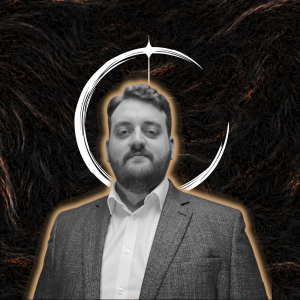
Croweaters sits at the intersection of psychology, behavioural science and business support. What began as project work has evolved into a business with five distinct divisions covering behavioural intelligence, employee assistance programmes (EAPs), psychotherapy, research and development, and future growth initiatives.
As founder Robert Carroll explains: “When I got made redundant in October 2024, it made me think ‘should I just go full time into this’?’
Part of that process was identifying the services what Croweaters could and should offer and how they should link together into five divisions under one brand. “The first is the Observatory, which is all of the behavioural intelligence analysis. Next is the Sanctuary, which is the employee assistance programme; then the Integration, which is the one-to-one psychotherapy and counselling service; and the Institute, where we stop being just a consultancy, but actually start researching the journals and data we collect.
“Finally there is the Reliquary, which is part of the longer-term vision to grow a successful, sustainable business from what Albert Einstein described as the eighth wonder of the world: compound interest.”
The background that led to Croweaters
The seeds of the business were planted long before Croweaters formally existed. A traumatic experience at the age of 13 led Robert to develop a lifelong interest in psychology and human behaviour. He became fascinated by the work of American psychologist Paul Ekman and devoted himself to understanding why people think, feel and behave as they do: “That was the small acorn to grow the mighty oak of psychology and behavioural analysis in me. I started researching Ekman’s work like there was no tomorrow. I downloaded all of his books and researched his journal articles.”
That interest led him to study psychology at Nottingham Trent University, specialising in forensic and clinical psychology. After graduating during the Covid era, he worked across a range of roles including sales, IT, data analytics and even arboriculture. Alongside those jobs, he quietly built a side-hustle business that would eventually become Croweaters.
The push that turned the side-hustle into the only hustle
Like many entrepreneurs, Robert didn’t initially plan to make his side business his full-time career. When he was made redundant from a data analytics role in October 2024 following a merger, his first instinct was to find another permanent position. For six months, he focused on job hunting with extraordinary determination: “Between October 2024 and April 2025, I was trying to find full-time work. In that period I applied to 8,000 jobs and got one interview.”
Eventually, he realised that the same energy could be channelled into growing his own business: “I realised, if I can apply to 8,000 jobs in six months, what if I put that same level of work ethic into the business? It’s not a case of if it will succeed, it’ll be a case of when.”
That shift in mindset transformed everything.
The name behind the business
 It was during this pivotal period that Croweaters acquired its distinctive identity.
Having lost his job just before a planned holiday to the Lake District, Robert tried to put his worries to one side and enjoy the break. Instead, he found himself having the same recurring, unusual dream: “Every single night of that holiday I had a dream where I sat down to a table with a black leather book that had a gold crow on it and the word Croweaters. I’m a big fan of Jungian psychotherapy, so I thought, if I’m going to be pushing subconscious therapy, I need to listen to my own.”
The name stuck.
The branding has evolved since then, but the philosophy remains the same. Croweaters deliberately embraces an alternative identity that stands out from the more conventional look often associated with therapy providers. As someone with a lifelong interest in art, Robert wanted a brand that reflected his own interests and views as well as would appeal to people who might feel uncomfortable walking into a traditional counselling environment:
“At the moment, nearly every therapeutic brand is a white background and a purple tree. When you’re talking to construction workers and people from more traditional industries, they don’t necessarily want to go into that sort of environment. Having something that looks different has helped attract people who need support but don’t feel that conventional therapy settings are for them.”
It is a deliberately polarising approach, but one that reflects his belief that businesses should stay true to their identity rather than trying to appeal to everyone.
The importance of mentors
No entrepreneur succeeds entirely alone, and Robert is quick to acknowledge the people who helped shape his journey.
While visiting his partner’s office at Churchill Square Business Centre in Kings Hill, he was introduced to a network of business owners in other units within the business centre who helped him refine his thinking – and more importantly take him under their wing, a generosity and kindness that he is still grateful for to this day: “The mentorship that I got from the directors and the team at NeuxPark, (in Unit 40) – including Adam, Tom, Richard, Mark and Katie – alongside Steven Doyle and the team at Simple IT4U (in Unit 70) really allowed me to facilitate going full time. If it wasn’t for those two companies and the individuals involved, I would not be here today – nor the man I am today.”
Those conversations helped him clarify exactly what Croweaters should become and gave him the confidence to make the leap from side-hustle to full-time business owner.
Finding the right virtual office
Today, Croweaters operates from a virtual office at Churchill Square Business Centre in Kings Hill. Becoming a Capital Space customer was the natural next step after spending so much time in the business community there, and getting so much support from it:
“I’m in a virtual office at the moment, but there is a big push to get a physical space because I’ve got quite unique branding and my brain’s quite creative. I’d love to have an actual space to make my own.” The fact that Capital Space customers can customise their workspaces will make that possible for Croweaters, when the time is right.
In the meantime, the practical benefits of a virtual office are only part of the appeal. Just as important has been the support available from the team on site: “The staff on the reception desk have been absolutely fantastic. They’ve been very patient with me as I’ve tried to figure out what Croweaters is.”
Networking to build business success
Once he committed fully to the business, Robert invested heavily in networking. Rather than spending money on advertising, he focused on building relationships through organisations including BNI and Kent Invicta Chamber of Commerce. He aimed to attend three or four networking events every week: “Not trying to push the business, but trying to make myself known. It is one of those things where it’s very niche what I do. It’s not a case of everyone needs it at this moment in time, but when they think about it, they’ll think about me first.”
That approach paid off. Much of the behavioural intelligence work and many of the EAP opportunities that Croweaters now delivers have been generated through trusted relationships built via networking.
Key milestones in Croweater’s business journey
The results achieved since the business became a full-time focus have been significant. Croweaters has delivered more than 450 hours of therapeutic work and over 1,000 hours of behavioural intelligence work since growth accelerated after December 2024. The company has also taken on its first team member and secured clients ranging from small businesses to organisations with multi-million-pound turnovers.
Yet when asked about his proudest achievements, Robert doesn’t point to revenue or growth figures: “The actual highlights are seeing people change in a positive way. I’ve got over 20 one-to-one therapy clients and within six sessions they’re a completely different person. It’s almost like you can see them have finally exhaled for the first time in a long time.”
For him, that human impact remains the ultimate measure of success.
Robert’s top business tips
When asked what advice he would give other entrepreneurs, Robert returns to the theme that has defined his own journey: commitment.
His favourite quote is: “If something burns your soul with purpose and desire, it’s your duty to be reduced to ashes by it”, by Andrea Balt, but often wrongly attributed to Charles Bukowski.
For business owners, Robert believes success comes from fully committing to the things that matter most: “If it’s something that is a passion for you, then it’s your job to be reduced to ash by it so you don’t become another dusty book on the shelf of people that wanted to do a little bit.”
He also believes entrepreneurs should focus relentlessly on where they can make the greatest impact with their time and energy. For him, that meant redirecting the effort he had been putting into job applications and investing it into relationship building, learning from mentors and growing a business that reflected his vision.
Sometimes business success starts with a setback – and for Robert Carroll, redundancy became the catalyst that transformed a side-hustle into a growing business built on passion, purpose and perseverance.